The Future of Property Management in Kenya: 6 Powerful Trends

The Future of Property Management in Kenya
The future of property management in Kenya is being shaped by rapid technological innovation, changing tenant expectations, and a growing demand for professional, efficient real estate services. As urbanization accelerates and property investments continue to expand, traditional management methods are giving way to smarter, data-driven approaches that enhance operational efficiency, improve tenant satisfaction, and maximize long-term returns.
Embracing PropTech and Digital Transformation
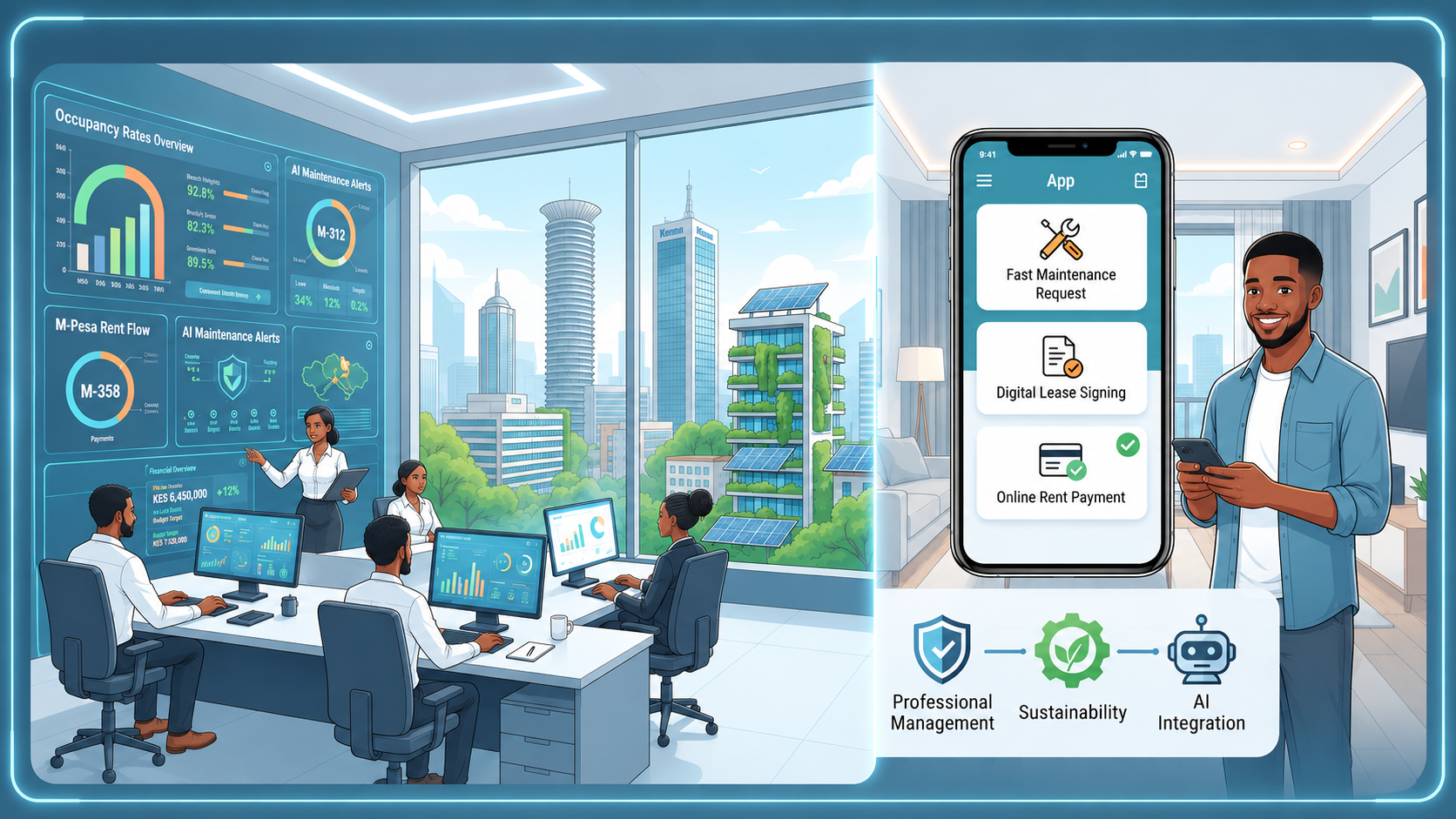
Property Technology (PropTech) is revolutionizing how properties are managed across Kenya. Modern property management is no longer dependent on spreadsheets, paper records, or manual rent collection. Instead, integrated digital platforms enable property managers to automate rent collection through mobile money solutions such as M-Pesa, manage lease agreements electronically, communicate with tenants in real time, and generate accurate financial reports from a single dashboard.
These technologies provide property owners with greater visibility into occupancy rates, cash flow, and property performance while delivering a seamless digital experience for tenants.
Artificial Intelligence Is Reshaping Property Management
Artificial Intelligence (AI) is becoming an essential tool in modern property management. AI-powered chatbots can respond to tenant inquiries around the clock, while intelligent systems automate routine administrative tasks such as rent reminders, payment tracking, and maintenance scheduling.
Predictive maintenance powered by AI and smart building technologies helps identify potential equipment failures before they become costly repairs. AI also analyzes market trends, rental demand, and pricing patterns, enabling property owners and managers to make informed investment decisions and remain competitive in Kenya’s evolving real estate market.
Sustainability Is Driving Long-Term Value
Sustainability is no longer an optional feature—it is becoming a competitive advantage. Property owners are increasingly adopting energy-efficient lighting, solar power systems, rainwater harvesting, and smart water management solutions to reduce operating costs and minimize environmental impact.
Green buildings not only lower utility expenses but also attract environmentally conscious tenants, increase property values, and contribute to long-term investment sustainability. As demand for sustainable developments continues to grow, environmentally responsible property management will play an increasingly important role in the Kenyan real estate sector.
Meeting the Expectations of Modern Tenants
Today’s tenants expect more than just a place to live or work. They value responsive property management, transparent communication, secure environments, convenient online payment options, and prompt maintenance services.
Providing exceptional customer service and leveraging digital communication channels improves tenant satisfaction, strengthens landlord-tenant relationships, and reduces vacancy rates. Property managers who prioritize the tenant experience are better positioned to retain quality tenants and maintain consistent rental income.
The Expanding Role of Professional Property Managers
Professional property management has evolved far beyond collecting rent and coordinating repairs. Modern property managers oversee every aspect of a property’s performance, including marketing vacant units, conducting tenant screening, coordinating maintenance, managing contractors, preparing financial reports, carrying out routine inspections, and ensuring compliance with Kenyan property laws and regulations.
By combining technology with industry expertise, professional property managers help property owners minimize risks, protect their investments, and maximize returns while reducing the burden of day-to-day operations.
Preparing for the Future
To remain competitive, property owners must embrace innovation, invest in sustainable practices, and adapt to changing market demands. Leveraging digital technology, adopting AI-driven solutions, and partnering with experienced property management professionals will enable investors to improve efficiency, enhance tenant satisfaction, and increase the long-term value of their properties.
Conclusion
The future of property management in Kenya is smart, sustainable, and tenant-centric. As technology continues to transform the industry, successful property owners will be those who embrace digital innovation, prioritize exceptional tenant experiences, and adopt professional management practices. Property management is no longer simply about maintaining buildings—it is about protecting investments, mitigating risks, increasing profitability, and creating lasting value in an increasingly competitive real estate market.
The Future of Property Management in Kenya
The future of property management in Kenya is being shaped by rapid technological innovation, changing tenant expectations, and a growing demand for professional, efficient real estate services. As urbanization accelerates and property investments continue to expand, traditional management methods are giving way to smarter, data-driven approaches that enhance operational efficiency, improve tenant satisfaction, and maximize long-term returns.
Embracing PropTech and Digital Transformation
Property Technology (PropTech) is revolutionizing how properties are managed across Kenya. Modern property management is no longer dependent on spreadsheets, paper records, or manual rent collection. Instead, integrated digital platforms enable property managers to automate rent collection through mobile money solutions such as M-Pesa, manage lease agreements electronically, communicate with tenants in real time, and generate accurate financial reports from a single dashboard.
These technologies provide property owners with greater visibility into occupancy rates, cash flow, and property performance while delivering a seamless digital experience for tenants.
Artificial Intelligence Is Reshaping Property Management
Artificial Intelligence (AI) is becoming an essential tool in modern property management. AI-powered chatbots can respond to tenant inquiries around the clock, while intelligent systems automate routine administrative tasks such as rent reminders, payment tracking, and maintenance scheduling.
Predictive maintenance powered by AI and smart building technologies helps identify potential equipment failures before they become costly repairs. AI also analyzes market trends, rental demand, and pricing patterns, enabling property owners and managers to make informed investment decisions and remain competitive in Kenya’s evolving real estate market.
Sustainability Is Driving Long-Term Value
Sustainability is no longer an optional feature—it is becoming a competitive advantage. Property owners are increasingly adopting energy-efficient lighting, solar power systems, rainwater harvesting, and smart water management solutions to reduce operating costs and minimize environmental impact.
Green buildings not only lower utility expenses but also attract environmentally conscious tenants, increase property values, and contribute to long-term investment sustainability. As demand for sustainable developments continues to grow, environmentally responsible property management will play an increasingly important role in the Kenyan real estate sector.
Meeting the Expectations of Modern Tenants
Today’s tenants expect more than just a place to live or work. They value responsive property management, transparent communication, secure environments, convenient online payment options, and prompt maintenance services.
Providing exceptional customer service and leveraging digital communication channels improves tenant satisfaction, strengthens landlord-tenant relationships, and reduces vacancy rates. Property managers who prioritize the tenant experience are better positioned to retain quality tenants and maintain consistent rental income.
The Expanding Role of Professional Property Managers
Professional property management has evolved far beyond collecting rent and coordinating repairs. Modern property managers oversee every aspect of a property’s performance, including marketing vacant units, conducting tenant screening, coordinating maintenance, managing contractors, preparing financial reports, carrying out routine inspections, and ensuring compliance with Kenyan property laws and regulations.
By combining technology with industry expertise, professional property managers help property owners minimize risks, protect their investments, and maximize returns while reducing the burden of day-to-day operations.
Preparing for the Future
To remain competitive, property owners must embrace innovation, invest in sustainable practices, and adapt to changing market demands. Leveraging digital technology, adopting AI-driven solutions, and partnering with experienced property management professionals will enable investors to improve efficiency, enhance tenant satisfaction, and increase the long-term value of their properties.
Conclusion
The future of property management in Kenya is smart, sustainable, and tenant-centric. As technology continues to transform the industry, successful property owners will be those who embrace digital innovation, prioritize exceptional tenant experiences, and adopt professional management practices. Property management is no longer simply about maintaining buildings—it is about protecting investments, mitigating risks, increasing profitability, and creating lasting value in an increasingly competitive real estate market.
The Future of Property Management in Kenya
The future of property management in Kenya is being shaped by rapid technological innovation, changing tenant expectations, and a growing demand for professional, efficient real estate services. As urbanization accelerates and property investments continue to expand, traditional management methods are giving way to smarter, data-driven approaches that enhance operational efficiency, improve tenant satisfaction, and maximize long-term returns.
Embracing PropTech and Digital Transformation
Property Technology (PropTech) is revolutionizing how properties are managed across Kenya. Modern property management is no longer dependent on spreadsheets, paper records, or manual rent collection. Instead, integrated digital platforms enable property managers to automate rent collection through mobile money solutions such as M-Pesa, manage lease agreements electronically, communicate with tenants in real time, and generate accurate financial reports from a single dashboard.
These technologies provide property owners with greater visibility into occupancy rates, cash flow, and property performance while delivering a seamless digital experience for tenants.
Artificial Intelligence Is Reshaping Property Management
Artificial Intelligence (AI) is becoming an essential tool in modern property management. AI-powered chatbots can respond to tenant inquiries around the clock, while intelligent systems automate routine administrative tasks such as rent reminders, payment tracking, and maintenance scheduling.
Predictive maintenance powered by AI and smart building technologies helps identify potential equipment failures before they become costly repairs. AI also analyzes market trends, rental demand, and pricing patterns, enabling property owners and managers to make informed investment decisions and remain competitive in Kenya’s evolving real estate market.
Sustainability Is Driving Long-Term Value
Sustainability is no longer an optional feature—it is becoming a competitive advantage. Property owners are increasingly adopting energy-efficient lighting, solar power systems, rainwater harvesting, and smart water management solutions to reduce operating costs and minimize environmental impact.
Green buildings not only lower utility expenses but also attract environmentally conscious tenants, increase property values, and contribute to long-term investment sustainability. As demand for sustainable developments continues to grow, environmentally responsible property management will play an increasingly important role in the Kenyan real estate sector.
Meeting the Expectations of Modern Tenants
Today’s tenants expect more than just a place to live or work. They value responsive property management, transparent communication, secure environments, convenient online payment options, and prompt maintenance services.
Providing exceptional customer service and leveraging digital communication channels improves tenant satisfaction, strengthens landlord-tenant relationships, and reduces vacancy rates. Property managers who prioritize the tenant experience are better positioned to retain quality tenants and maintain consistent rental income.
The Expanding Role of Professional Property Managers
Professional property management has evolved far beyond collecting rent and coordinating repairs. Modern property managers oversee every aspect of a property’s performance, including marketing vacant units, conducting tenant screening, coordinating maintenance, managing contractors, preparing financial reports, carrying out routine inspections, and ensuring compliance with Kenyan property laws and regulations.
By combining technology with industry expertise, professional property managers help property owners minimize risks, protect their investments, and maximize returns while reducing the burden of day-to-day operations.
Preparing for the Future
To remain competitive, property owners must embrace innovation, invest in sustainable practices, and adapt to changing market demands. Leveraging digital technology, adopting AI-driven solutions, and partnering with experienced property management professionals will enable investors to improve efficiency, enhance tenant satisfaction, and increase the long-term value of their properties.
Conclusion
The future of property management in Kenya is smart, sustainable, and tenant-centric. As technology continues to transform the industry, successful property owners will be those who embrace digital innovation, prioritize exceptional tenant experiences, and adopt professional management practices. Property management is no longer simply about maintaining buildings—it is about protecting investments, mitigating risks, increasing profitability, and creating lasting value in an increasingly competitive real estate market.