
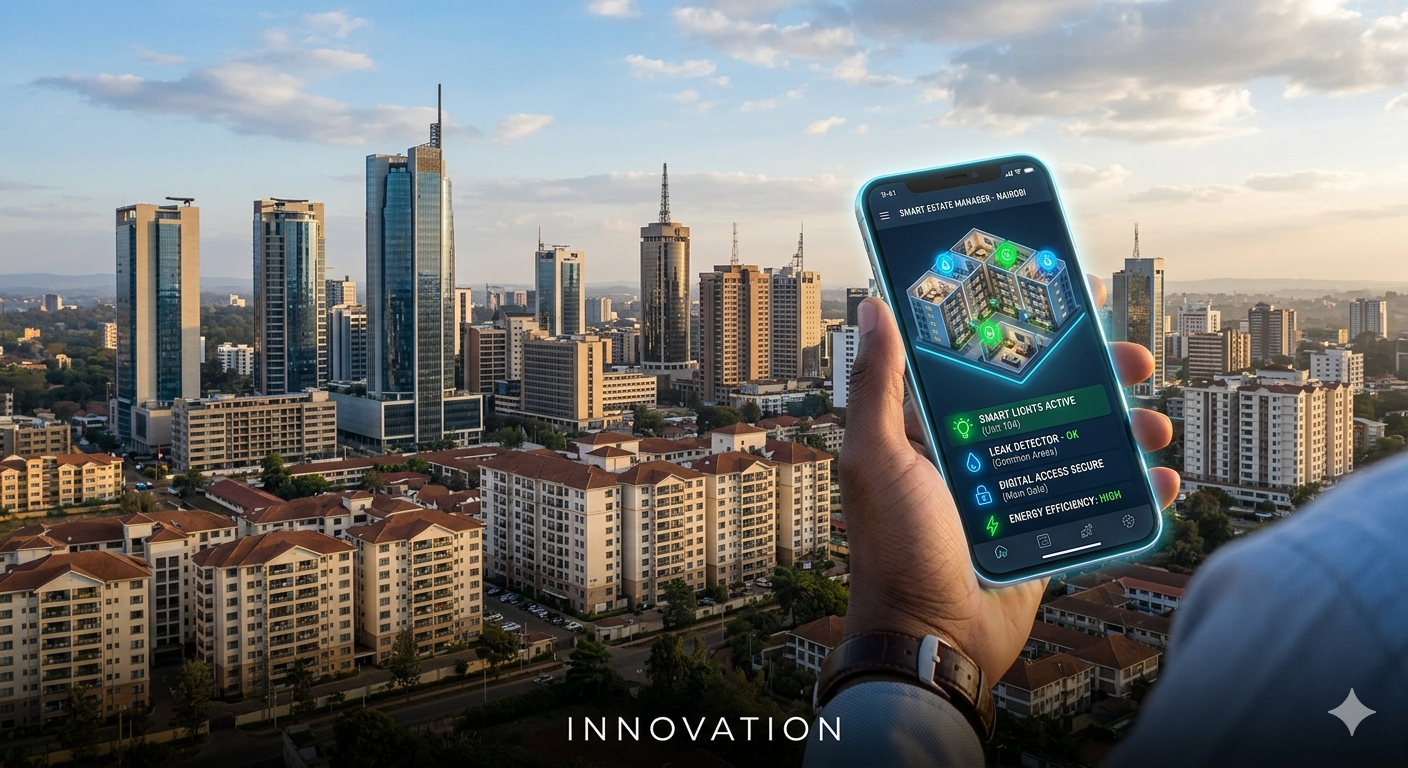

The Rise of Smart Homes in Nairobi
What it Means for Property Managers in Kenya’s Silicon Savannah
Nairobi, often referred to as the “Silicon Savannah,” is undergoing a silent yet
rapid architectural evolution. Beyond the shining urban towers of Upper Hill
and the expansive estates of Westlands, a technological shift is happening
inside the four walls of residential units. Smart home technology—once
considered a luxury reserved for the ultra-wealthy—is becoming a standard
expectation for the modern Nairobi tenant. For property managers, this shift
represents both a significant challenge and a massive opportunity.
The Evolution of the Nairobi Tenant
Understanding Property Trends in Nairobi
The demographic of the Nairobi renter is shifting. We are seeing a rise in
tech-smart millennials and Gen Z professionals who work for global tech
hubs, NGOs, and the rising local startup scene. These tenants view
high-speed internet not as an amenity, but as a utility, on average, with water and
electricity. However, their expectations have moved beyond just Wi-Fi. They
are looking for convenience, security, and energy efficiency—all of which are
powered by the Internet of Things (IoT).
From automated lighting systems in Kilimani apartments to smart locks in
gated communities in Karen, the demand is clear. Tenants want to control
their living environments via their smartphones. For property managers, this
means the traditional “bricks and mortar” approach is no longer sufficient. To
stay competitive, one must understand how these technologies integrate into
the management lifecycle.
“In a market where supply is rapidly catching up to demand, technology is
the new differentiator. A property that thinks for itself is a property that sells
itself.”
Operational Efficiency: Beyond the Human Element
One of the most intense impacts of smart home technology on property
management in Nairobi is the optimization of operations. Historically,
managing a large portfolio required a small army of caretakers, plumbers,
and electricians. Smart sensors are changing that.
- Leak Detection and Preventive Maintenance
Water damage is a silent killer of property value. In many Nairobi high-rises,
a leaking pipe on the 10th floor can cause catastrophic damage to the units
below before it is even detected. Smart water sensors can alert property
managers the moment a leak is detected, allowing for immediate
intervention. This shifts the management style from reactive (fixing what is
broken) to proactive (preventing the break).
- Energy Management
With the fluctuating costs of electricity in Kenya, energy efficiency is a high
priority. Smart temperature regulators and automated lighting in common areas ensure
that power is not wasted. Property managers can monitor energy
consumption patterns across a building, identifying inefficiencies that would
have been invisible a decade ago.
Security: The Nairobi Priority
Security remains a top concern for residents in Nairobi. While physical guards
and perimeter fences are standard, smart technology provides a “second
layer of digital security that tenants find incredibly appealing. Smart video
doorbells, motion-activated cameras, and biometric access control systems
provide a sense of safety that traditional methods cannot match.
For property managers, this simplifies access management. Gone are the
days of rekeying locks every time a tenant moves out. Digital keys can be
revoked and issued instantly. Furthermore, smart systems provide an audit
trail of who entered or exited the premises, which is invaluable for resolving
security disputes or monitoring service providers.
The Challenges: Infrastructure and Investment
While the benefits are clear, the road to “Smart Nairobi” is not without its
Road holes. The primary challenge for property managers is the initial capital
expenditure (CAPEX). Upgrading older buildings with smart infrastructure
can be expensive. There is also the concern of technical irrelevance—
Technology moves fast, and hardware installed today might be outdated in
five years.
Furthermore, there is the issue of cybersecurity. As homes become more
connected, they become more vulnerable to hacking. Property managers
must now concern themselves with data privacy and the security of the
building’s network. This requires a new set of skills or, at the very least,
partnerships with reliable IT firms.
Value Appreciation and Tenant Retention
Despite the challenges, the Return on Investment (ROI) is compelling. Smart
homes typically command higher rental yields—often between 10% to 20%
higher than non-smart counterparts in the same neighborhood. More
importantly, they foster tenant loyalty. A tenant who enjoys the convenience
of a smart home is less likely to move, reducing vacancy rates and turnover
costs.
Property managers can also leverage “Smart Data” to improve the tenant
experience. By analyzing how facilities are used, managers can make
informed decisions about future upgrades, ensuring that capital is spent on
things that tenants actually value.
Conclusion: Embracing the Future
The rise of smart homes in Nairobi is not a passing trend; it is a fundamental
shift in how we interact with our living spaces. For property managers, the
message is clear: adapt or get left behind. Embracing IoT and smart
technologies is no longer about being “futuristic”—it’s about being efficient,
secure, and profitable in a digital age.
As Nairobi continues to cement its status as a global tech leader, our homes
must reflect that ambition. The property managers who succeed in the next
decade will be those who view themselves as technology facilitators as much
as real estate administrators. The smart home revolution is here, and it’s time
to plug in.

