
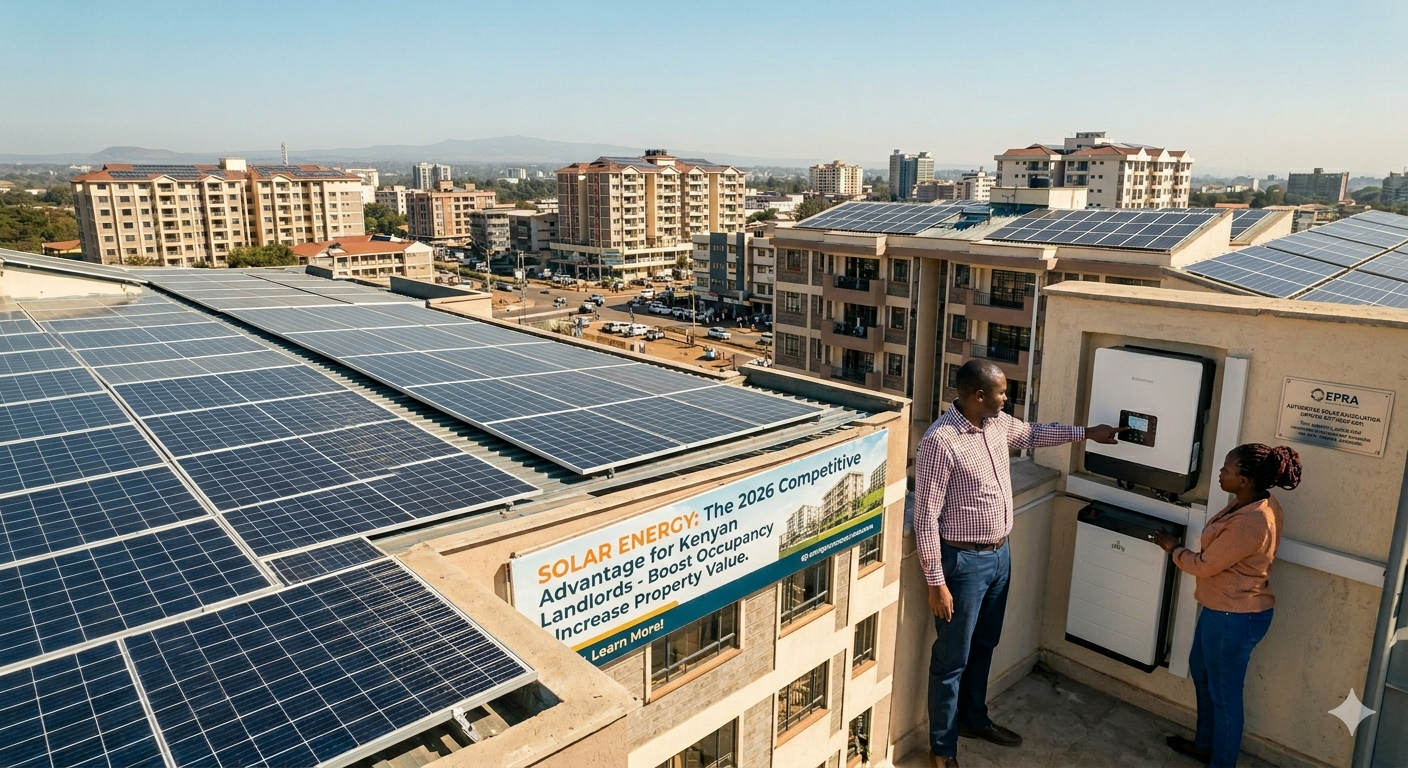

The Rise of Solar-Powered Rentals in Kenya: A Guide for Modern Landlords
In the fast-evolving landscape of Kenyan real estate, a quiet revolution is taking place on the rooftops of Nairobi, Mombasa, and Eldoret. For decades, the “Standard Kenyan Apartment” was defined by its location, floor plan, and closeness to the road. Today, in 2026, a new amenity has climbed to the top of the tenant’s wishlist: solar energy.
What started as a niche solution for off-grid luxury villas has become a mainstream game-changer for rental properties. From mid-level bedsitters in Ruiru to commercial hubs in Westlands, this technology is no longer just “green”—it’s a financial powerhouse.
The Shift from Luxury to Necessity
In 2026, Kenya’s energy landscape is defined by two realities: rising Kenya Power (KPLC) tariffs and an increasingly erratic grid. For a tenant, a “cheap” apartment isn’t cheap if the monthly electricity bill rivals the rent.
Landlords are realizing that integrating solar energy isn’t just about saving the planet; it’s about occupancy rates. Properties with reliable backup systems stay fully occupied even during the toughest economic months. Tenants are now willing to pay a premium—often 5% to 10% more in rent—for units that guarantee uninterrupted lighting and lower utility costs.
Beyond Water Heating: The Rise of Hybrid Systems
The “Solar Water Heating Regulations” of the past decade laid the groundwork, but 2026 is the year of Hybrid Energy Systems. These setups combine panels with advanced lithium-ion battery storage powered by solar energy.
How it works for Rentals:
- Common Area Lighting- Landlords use this system to power security lights, electric fences, and lift systems. This drastically reduces the “Service Charge” passed on to tenants, making the property more competitive.
- Individual Unit Inverters- Some forward-thinking developers are installing dedicated backup systems for each apartment. This allows tenants to maintain essential appliances during grid outages without relying on diesel generators.
The Financial Logic: ROI for Landlords
The most significant change in 2026 is the cost of entry. Global prices for clean energy components have dropped significantly, and Kenya has maintained zero VAT and zero import duty on renewable systems.
| System Type | Best For | Estimated Cost (KES) | Payback Period |
|---|---|---|---|
| Small Residential | Bedsitters / 1-Bed | 100k – 200k | 3 – 4 Years |
| Medium Hybrid | 3-Bedroom / Duplex | 300k – 600k | 5 Years |
| Commercial/Block | Entire Apartment Complex | 1.5M+ | 6 – 8 Years |
For a landlord, this technology delivers a double return on investment. First, property value increases immediately. Second, excess generated power can be monetized through sub-metering, creating a secondary income stream.
Clean Energy as a Tenant Magnet in 2026
The modern Kenyan tenant is tech-intelligent and often works from home. Reliability is their primary currency.
“I won’t even look at a house in Kileleshwa if it doesn’t have reliable power backup,” says Mark, a software developer in Nairobi. He adds that systems powered by solar energy are the only solution that avoids unpredictable monthly fuel or generator costs.
Landlords who market properties as “Energy Independent” are seeing stronger demand and higher-quality tenants. These are professional individuals and families who value stability and long-term affordability.
Challenges and System Quality Issues
It’s not all sunshine. The market in 2026 is flooded with low-quality components falsely marketed as renewable solutions.
A major trend is the rise of certified installations. Before signing a lease, tenants are increasingly verifying whether a building uses genuine solar energy and checking brand quality and installer certification from EPRA. Poor installations often lead to breakdowns, disputes, and high maintenance costs.
Final Thoughts
As we move further into 2026, the divide in the Kenyan rental market will be clear: those with solar energy and those without. This technology has moved from the “alternative” category to the “essential” category.
For landlords, it is a way to future-proof assets against rising costs and grid instability. For tenants, it is a way to stabilize monthly expenses. In the land of “The Eternal Sun,” it only makes sense that homes are finally powered by it.
Is your rental property ready? If you’re a landlord, the best time to install was yesterday; the second-best time is today.

